Independent musicians have access to tools that artists could only dream about a couple of decades ago.
You can release a song around the world from your laptop. You can upload a live performance to YouTube, announce a show on social media, sell vinyl from your website and send an email directly to fans.
The problem is keeping up with all of it.
For an artist without a label or marketing department, promotion can quickly turn into a pile of unrelated jobs. One day you are updating Spotify. The next you are making a concert graphic. Then you remember the website still has last year’s tour dates.
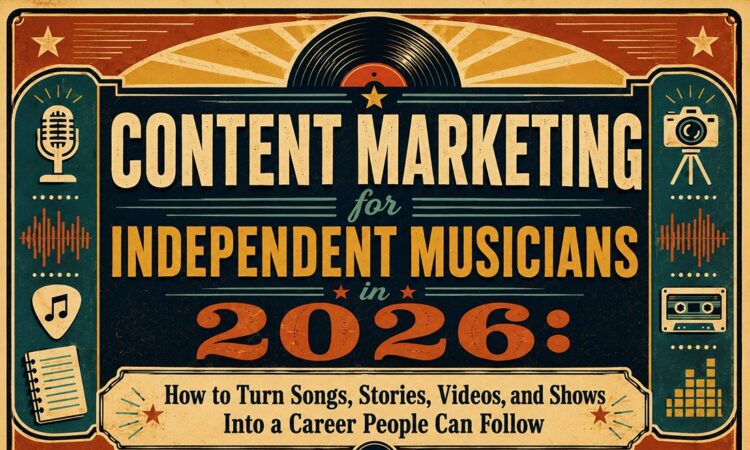
Content Marketing for Independent Musicians in 2026: How to Turn Songs, Stories, Videos, and Shows Into a Career People Can Follow was written to help musicians bring those pieces together.
The complete guide is available free through Gumroad. It also includes helpful prompts artists can copy, personalize and use when planning their own marketing.
Download the Free Music Marketing Guide
Start With the Music, Not the Platform
It is easy to get caught up in deciding what to post on Instagram, TikTok, Facebook or YouTube.
A simpler approach is to start with what is actually happening in your career.
You recorded a new song.
You have a show next month.
You just finished rehearsing.
You are pressing a new vinyl release.
You found an old demo that fans might enjoy hearing.
Those are the stories.
The platform comes second.
A studio story could become a short video, website post, email or podcast conversation. A good live performance might work on YouTube, appear in a tour announcement and provide several shorter clips.
Instead of inventing something new every day, musicians can get more use from the material they already have.
Give Fans Somewhere to Go
Getting attention is only part of music marketing.
Once somebody likes what they hear, make the next step obvious.
Can they find your other songs?
Are your upcoming shows easy to locate?
Can they buy a shirt, record or ticket?
Is there an email list they can join?
The guide covers artist websites, social media, Spotify, YouTube, email, merchandise and direct music sales with an emphasis on making those pieces work together.
That does not mean every platform needs constant attention.
It means each one should have a reason for being there.
Use the Prompts as a Starting Point
One useful part of the guide is its collection of prompts.
They can help musicians work through release campaigns, website updates, social media ideas, videos, individual concerts, tours and other promotional needs.
The prompts are not there to replace your personality.
They give you somewhere to begin.
Add the name of your song. Explain who you are trying to reach. Describe the show. Include the story behind the record. Mention what actually happened during the recording session.
Those details are what keep the finished material from sounding like everyone else.
Keep Talking About the Song
Release day gets a lot of attention, but it should not be the only day a song gets promoted.
A few weeks later, share an acoustic performance.
Explain an interesting lyric.
Post some studio footage.
Talk about a guitar part that changed during recording.
Play the song live and share the video.
There are plenty of people who did not hear the track the day it came out.
The same thinking works for concerts. A flyer tells people when and where. A story gives them a reason to show up.
Content Marketing for Independent Musicians in 2026 is meant to be used whenever you need it. Read the whole thing or jump directly to the section that fits what you are working on.
The full guide and its prompts are free.